Why Incomplete RFQs Cost Everyone Time
When a supplier receives an incomplete RFQ, they have two options: reject it (which helps no one) or make assumptions and issue a "budget price" — a number that may shift by 30–50% once real process data is clarified. Most suppliers choose option two, which means the buyer gets a number that feels like a quote but isn't one.
The most common missing items we see, in order of how often they hold up accurate pricing:
1. Throughput basis — is it wet feed or dry product? A 10 t/h dryer specified on wet basis at 40% inlet moisture is producing only 6 t/h dry product. The difference changes the dryer size significantly.
2. Outlet moisture tolerance — "as dry as possible" is not a specification. ±0.5%? ±2%? It matters.
3. Particle size distribution — not just D50, but D10 and D90. Fine-end behaviour determines dust control system design.
4. Heat source availability — "gas" could mean natural gas at 1 bar, 5 bar, or 25 bar. It matters for burner specification.
5. Site conditions — altitude affects combustion air density. Ambient temperature range affects dryer exhaust fan sizing.
The table below shows the minimum data set for each equipment type.
Minimum Data Requirements by Equipment Type
These are the data points that allow an accurate technical pre-sizing and reliable budget price — not a ballpark figure:
| Equipment Type | Must-Have Data | Nice-to-Have |
|---|---|---|
| Rotary Dryer | Material, bulk density, inlet & outlet moisture %, throughput (wet or dry basis), particle D10/D50/D90, max product temp, heat source | Site altitude, dust emission limit, fuel CV, photos of feed material |
| Fluidized Bed Dryer | Material, inlet & outlet moisture %, throughput, particle size D10/D50/D90 (must be narrow distribution), bulk density, heat-sensitivity temp | Cooling duty required? Target product temp after cooling, SDS for the material |
| Evaporator | Liquid name and full composition, inlet concentration (% or Brix), target outlet concentration, evaporation rate (kg water/h), available steam pressure (bar g), max product temp | Fouling tendency (scaling/precipitating?), foam tendency, viscosity at operating conc., corrosive components |
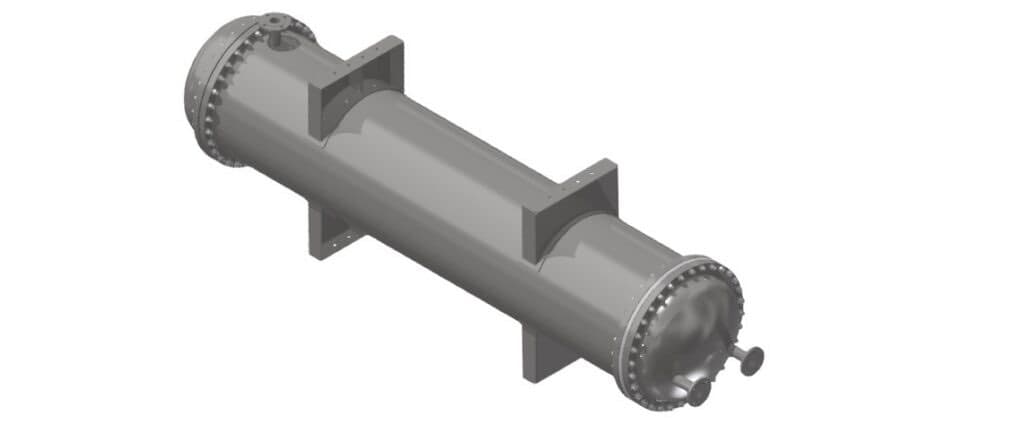
| Heat Exchanger | Both fluid names & compositions, hot/cold side flow rates (kg/h), inlet & outlet temps both sides, operating pressure both sides | Fouling factors, allowable pressure drops, preferred material of construction, condensation or phase change involved? |
| Dust Control (Cyclone + Bag Filter) | Gas flow rate (Nm³/h), gas temperature at inlet, dust load (g/Nm³), particle size distribution, emission limit (mg/Nm³) | Gas composition (moisture, corrosive components), dust bulk density, minimum ignition temperature if applicable |
What You Get Back (And What to Do With It)
With a complete data set, Lozzar Process returns a technical pre-sizing within 5 working days. This includes:
— Equipment type recommendation with brief justification
— Indicative dimensions (e.g. 2.4 m × 18 m rotary drum)
— Utility consumption (gas Nm³/h, steam kg/h, electrical kW)
— Estimated equipment weight and shipping class
— Budget price ±20–25%
This is not a purchase order-ready quotation — it's a pre-sizing to support your capex planning and help you compare options. A binding quotation follows after any open technical questions are resolved and a process design freeze is agreed. The difference between a pre-sizing and a final quote is usually less than 10%, provided the input data doesn't change.