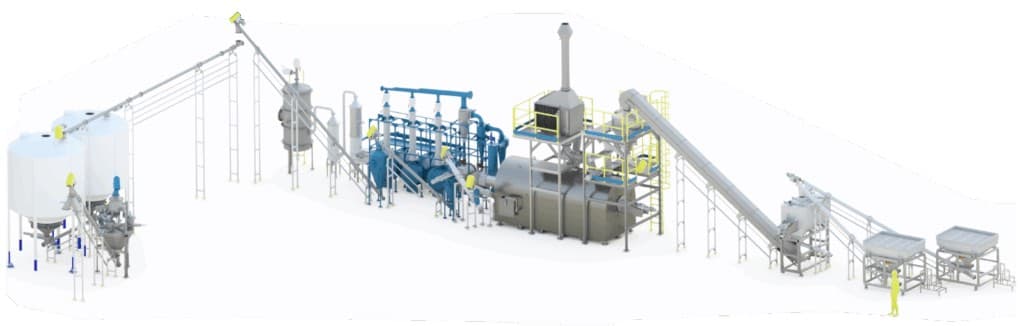
What Pyrolysis Actually Does (And Doesn't Do)
Pyrolysis is thermal decomposition in the absence of oxygen — the material is heated to 300–900°C without burning. The output is three simultaneous product streams: a solid char (or biochar), a condensable liquid (pyrolysis oil), and a non-condensable gas (syngas containing CO, H₂, CH₄).
What pyrolysis is NOT: it is not incineration (no direct combustion), not gasification (which uses controlled oxygen input), and not a universal waste destruction machine. It works well with dry, organic feedstocks. It works poorly with wet, heterogeneous, or chlorine-rich inputs.
The commercial value depends on which product stream you're optimising for — and that's determined by your choice of process temperature and heating rate. The comparison below shows what each mode delivers.
Slow vs Fast vs Flash: Which Mode for Which Goal?
The product split from pyrolysis is not fixed — you tune it by adjusting temperature and heating rate. Here's what each mode delivers:
| Parameter | Slow Pyrolysis (Carbonisation) | Fast Pyrolysis | Flash Pyrolysis / Gasification |
|---|---|---|---|
| Temperature | 300–500°C | 450–600°C | 700–900°C |
| Heating rate | 1–10°C/min | >100°C/s | >1,000°C/s |
| Residence time | Hours | 0.5–2 seconds | <0.5 seconds |
| Biochar yield (% dry feed) | 25–35% | 10–25% | <10% |
| Bio-oil yield (% dry feed) | 25–40% | 60–75% | 5–15% |
| Syngas yield (% dry feed) | 25–35% | 15–25% | 75–90% |
| Commercial focus | Biochar (soil amendment, carbon credits, metallurgy) | Bio-oil (fuel replacement, chemical feedstock) | Syngas for power generation or H₂ production |
Feedstock: The Make-or-Break Variable
Every pyrolysis project that has failed in the past decade has had one thing in common: the feedstock was poorly characterised before plant design. Three rules apply to all industrial pyrolysis feedstocks:
Rule 1: It must be dry. Most pyrolysis reactors require inlet moisture below 15–20%. Wet biomass, wet sludge, and wet agricultural residues all need pre-drying — typically in a rotary dryer operating at 300–500°C inlet gas temperature.
Rule 2: It must be consistent. Feedstock composition variability drives product variability. A plant designed for wood chips will produce inconsistent biochar quality if the feedstock switches to bark, straw, or contaminated demolition wood.
Rule 3: Halogen content must be controlled. PVC, chlorinated compounds, and brominated flame retardants in the feedstock create HCl and HBr in the syngas, which require expensive gas cleaning systems and may exceed permit limits. Maximum Cl content is typically <0.5% for standard designs.